A first hub was built and tested: charging and running from the battery worked, and testing found issues. The current design fixes them but has not been built yet, and not every feature has been bench-tested. Check what has been tested, set the cell chemistry before attaching a battery, and bring up one board before ordering a batch.
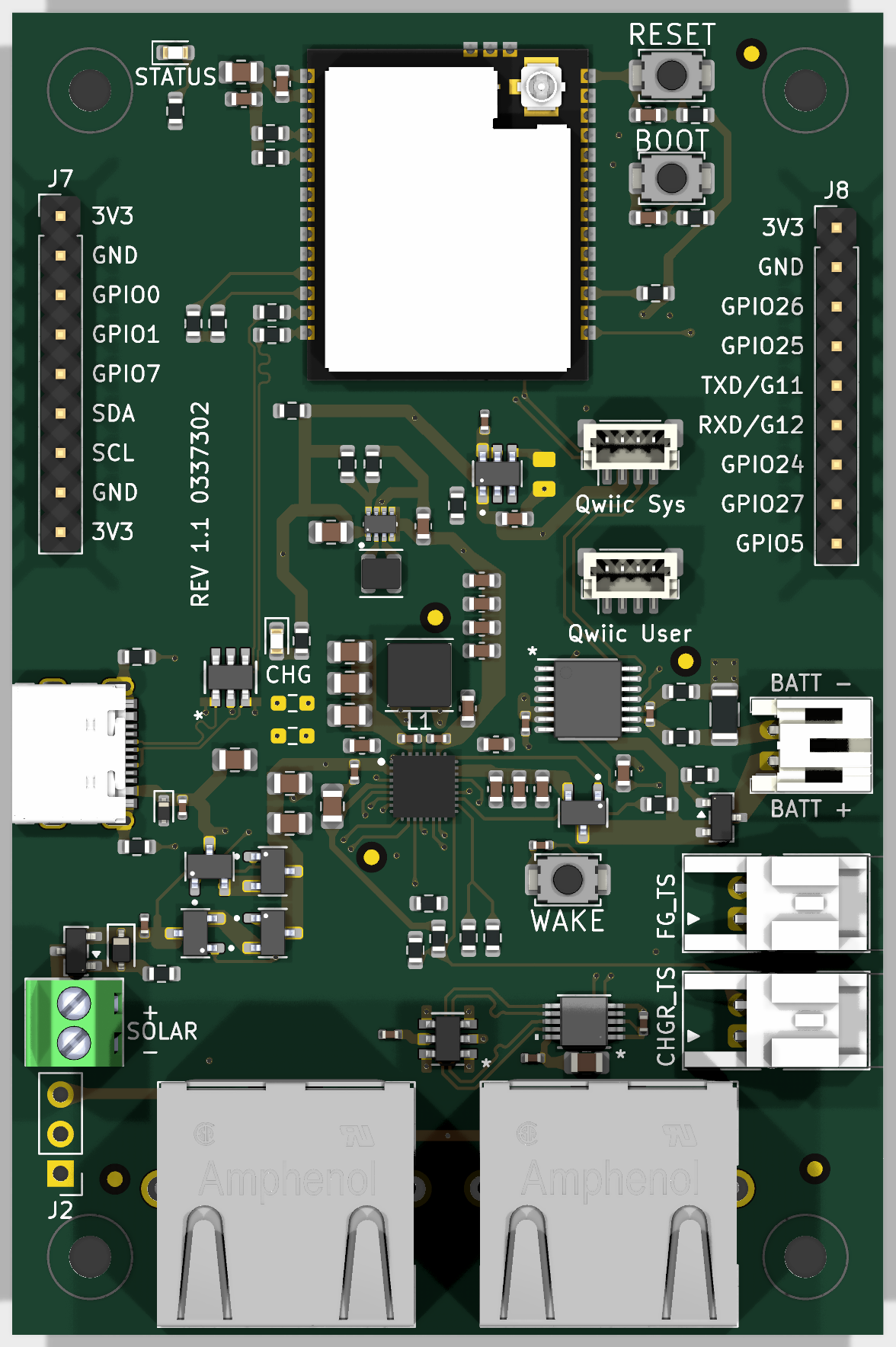
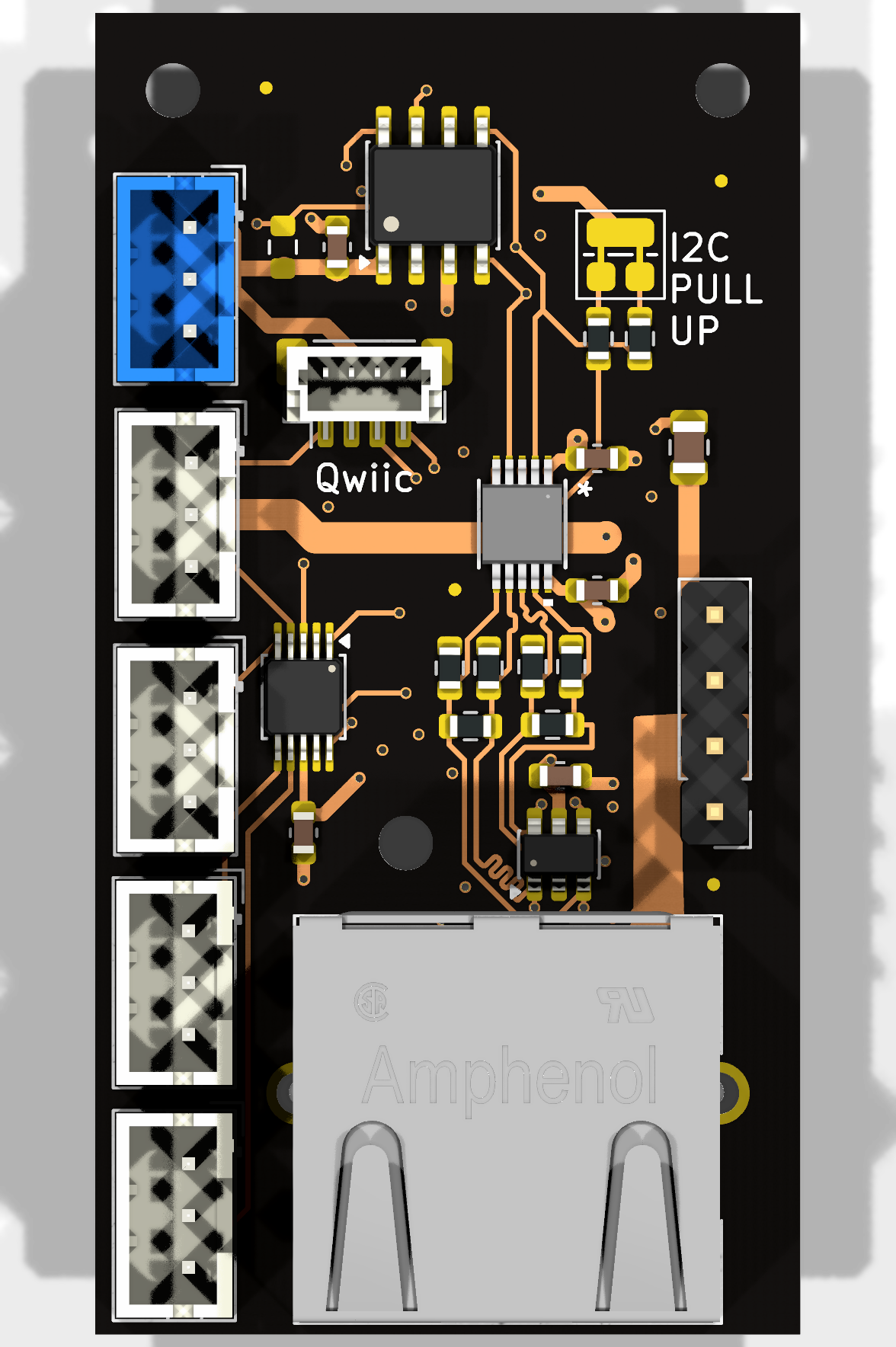
Three power sources, one battery
Runs from USB-C (5 V), a DC or solar panel input (3.6 V to 24 V), or a single lithium cell (Li-ion, LiPo or LiFePO4). The board picks the source and charges the battery automatically; both inputs can be connected at once.
Solar panel tracking
Every couple of minutes the charger measures the panel's open-circuit voltage and sets its minimum input voltage to a fraction of it, so a weak panel in poor light is not dragged down.
Two separate I2C buses
An always-on bus for the charger and fuel gauge, and a switchable sensor bus. The sensor bus feeds a STEMMA QT port and two RJ45 (8P8C) jacks that carry I2C over an Ethernet cable to remote sensors.